
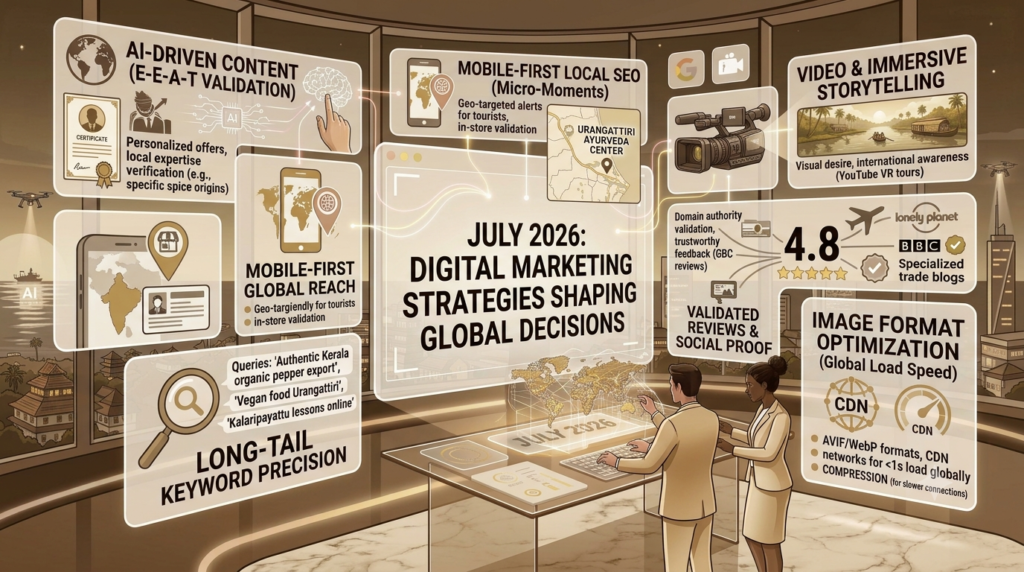
In 2026, the landscape of digital marketing is highly sophisticated, personalized, and seamlessly integrated into a customer’s daily life, especially in dynamic markets like Kerala. Digital marketing no longer just presents options; it actively shapes perceptions, guides journeys, and reinforces every stage of the consumer decision-making process.
Here is a detailed breakdown of how digital marketing, with a focus on cutting-edge strategies, influences customer decisions in the current environment.
1. The Power of Personalized Content (E-E-A-T and AI)
Content in 2026 is hyper-personalized, often generated and delivered using advanced AI, and heavily dependent on establishing trust through E-E-A-T (Experience, Expertise, Authoritativeness, and Trustworthiness).
- Establishing Expertise (E-E-A-T): When a user in Urangattiri searches for “best organic spices Kerala,” Google prioritizes content that demonstrates genuine experience. A long-form blog post written by a multi-generational spice farmer, detailed video tours of the spice drying process, and validated quality certifications immediately build trust. This trust is the first, crucial factor in the decision process.
- Contextual AI Delivery: Digital marketing in 2026 doesn’t wait for the search. A customer browsing a food blog for traditional recipes might receive an immediate, unobtrusive, highly contextual ad for the exact organic pepper mentioned in the recipe, delivered by a brand that has established authority in Kerala spices.
- Case Study: Kerala Spices Export: As seen in the graphic above, a brand focusing on “Locally sourced Kerala spices for export” builds global trust by creating content around “Handcrafted Spices of Wayanad” (specific expertise). An international buyer researching this isn’t just seeing a product; they are experiencing the brand’s deep knowledge and authoritativeness.
2. Micro-Moments and Local Relevance (Mobile-First)
The majority of customer decisions, especially local ones, occur in “micro-moments”—immediate, needs-driven, mobile-first searches.
- “Near Me” and Local Search (Local SEO): Digital marketing ensures visibility in these split-second decisions. A tourist in Kerala searching for an “Authentic Kerala Ayurveda resort” (like the example in our graphic) will be guided to a business with an optimized Google Business Profile, high-quality local content, and positive, trust-validated reviews.
- Geo-Targeted Alerts and Mobile Reach: In 2026, mobile-first optimization includes geo-targeted, non-intrusive notifications. A customer in proximity to a specialized handicraft store might receive an invite for a live pottery demonstration, influencing an immediate visit.
- Example from the Graphic: The “Mobile-First Global Reach” panel highlights that being “search-friendly for tourists” is vital. Local SEO ensures that a specific need (e.g., “authentic Ayurveda”) is met instantly on a smartphone, directly guiding the customer’s choice.
3. Hyper-Targeted Awareness and Trust (Global Context)
Digital marketing in 2026 excels at creating highly targeted global awareness while building local trust.
- Video and Immersive Content: Video continues to be the dominant medium. To target an international market, Kerala businesses create high-production content, like “Hidden Kerala Backwaters on YouTube” (from the panel “Targeted Content for International Markets”). This visual storytelling creates desire and awareness long before a booking decision is made.
- International Speed and Image Optimization: As shown in the “Image Format Optimization” section, ensuring media loads rapidly across the globe (via global CDNs, modern AVIF/WebP formats, and compression) is a crucial, subtle way to influence decisions. A frustratingly slow image load can end a potential decision instantly. Fast, beautiful media creates a positive user experience (UX), which is linked to trust and higher conversion rates.
4. Search and Long-Tail Precision (Intent)
Long-tail search queries are highly specific and indicate a deep intent to purchase, making them incredibly influential in the final decision stages.
- Answering Specific Needs: Digital marketing moves beyond broad terms. A brand optimizing for “Best Vegan Food in Urangattiri 2026” or “locally sourced Kerala spices for export” is capturing a customer who knows exactly what they want. By providing the exact answer to this specific query, the decision-making friction is almost entirely eliminated.
- Guiding the Final Stage: Broad awareness brings customers to the funnel, but long-tail precision (as shown in the “Long-Tail Global Visibility” section) drives them across the finish line.
5. Quality Signals, Review Validation, and Social Proof (E-E-A-T and Backlinks)
In 2026, consumers are sophisticated and skeptical. They validate everything.
- Quality Backlinks and Domain Authority: When reputable sources, like Lonely Planet or the BBC (shown in the “Quality Backlinks” panel), link to a Kerala tourism business, it provides monumental trust validation. This external authority influences a decision far more than any self-promotional content.
- E-E-A-T Validated Reviews: Digital marketing ensures reviews are not just present but are validated. The “E-E-A-T Focus” panel emphasizes that “Trustworthiness (Google Business Profile reviews)” is crucial. Users check reviews extensively. Marketing strategies must actively manage and validate customer feedback to influence future decisions.
Summary of Influence:
Digital marketing in 2026 shapes customer decisions by:
- Validating Trust (E-E-A-T): Proving expertise and trustworthiness first.
- Meeting Micro-Needs (Mobile/Local): Being immediately available on mobile for split-second decisions.
- Visual Storytelling (Video/Targeted Content): Creating desire and international awareness through immersive video.
- Minimizing Friction (Optimization/Speed): Removing UX roadblocks to the purchase decision.
- Answering Precise Intent (Long-Tail): Directly fulfilling specialized demands.
- Providing Social Validation (Backlinks/Reviews): Allowing third-party validation to seal the decision.